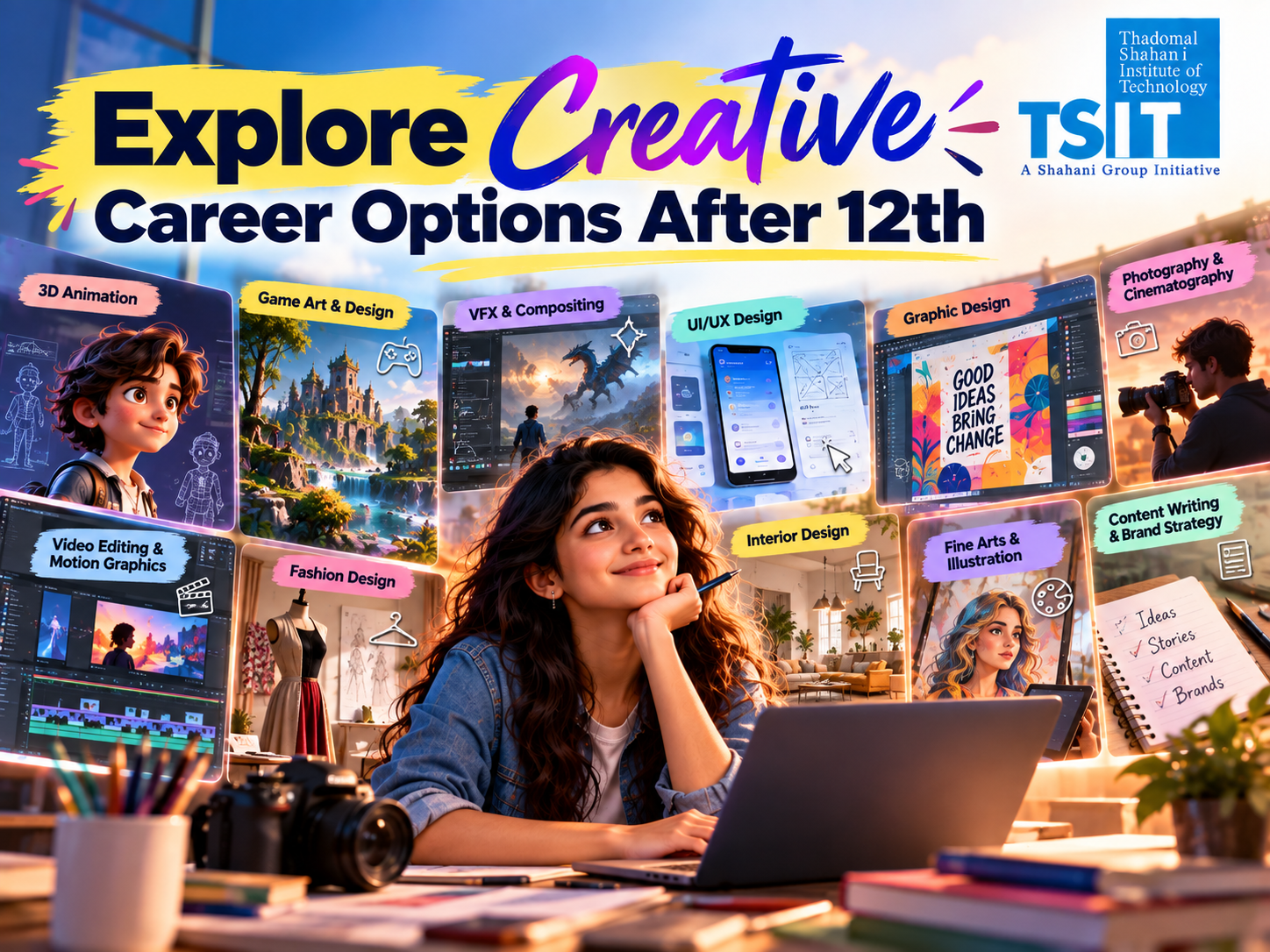

Animation, VFX & AI Careers: Roles, Skills & Courses
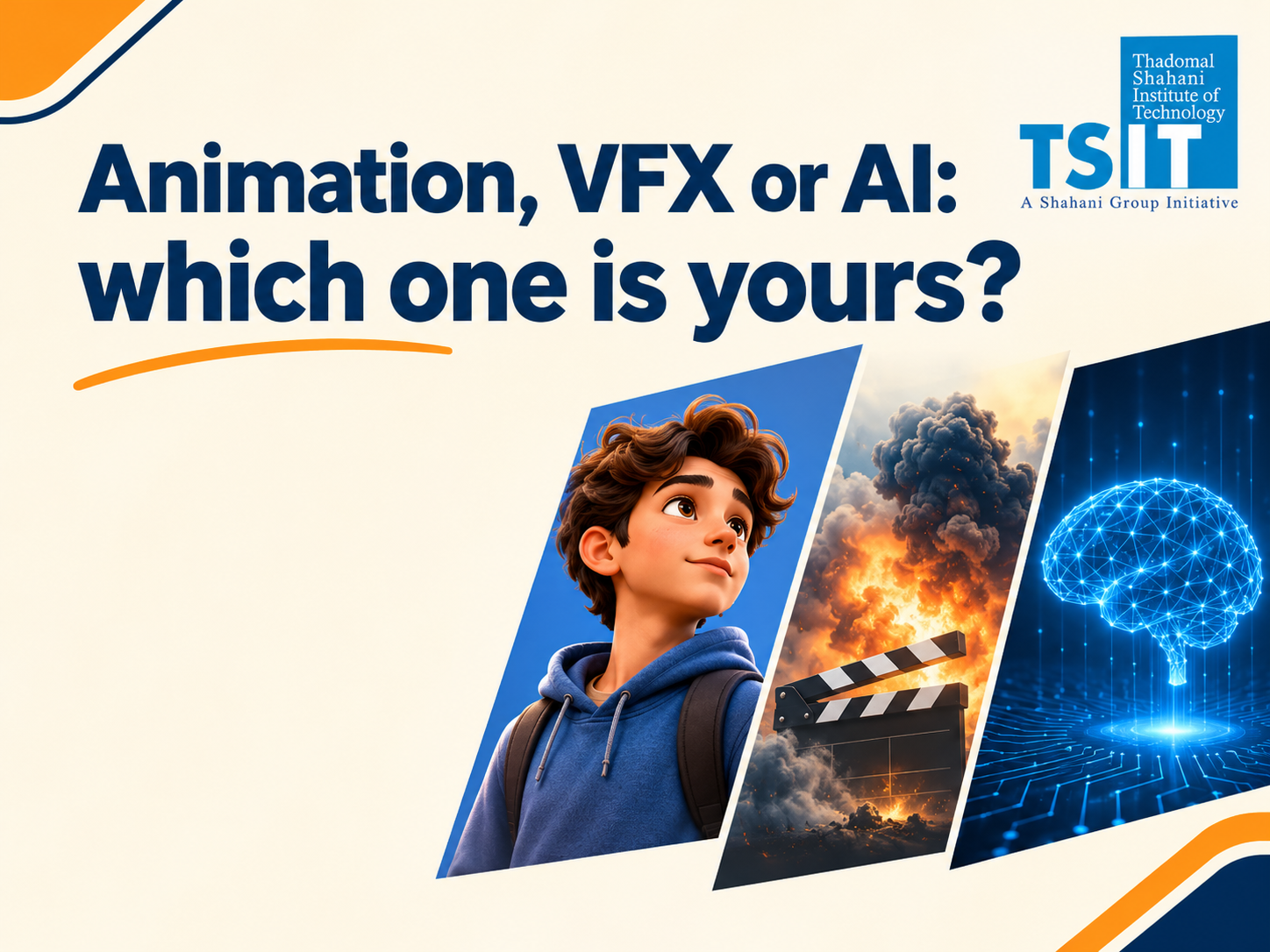
Do you love visuals, stories, games or technology? Then a career in animation, VFX and AI can be a great path for you. You can start right after Class 12, or after any graduation such as BCom, BSc, BA or engineering.
Can you build a career in animation, VFX or AI? Yes, you can, in any stream. Studios and companies mainly look at your skills, your portfolio and your practical experience, not only your degree subject.
This guide explains the career options, the skills you need, the courses you can choose and the steps to get started. We have kept it simple, so you can plan your next move with confidence.
Why Animation, VFX and AI Are Growing Fast?
Every day, people watch films, OTT series, reels, ads and games. All of this needs visual content, and that content is made by animators, VFX artists and digital creators.
Indian studios are now part of big global productions. For example, Netflix worked with 15 India-based VFX studios and nearly 1,200 artists to create the aerial scenes in its war drama Operation Safed Sagar. You can see more great VFX work in our list of Indian web series with amazing VFX and animation.
At the same time, AI is changing how creative work is done. It helps artists finish repetitive tasks faster, so they can spend more time on creative ideas. This is creating new roles for people who understand both art and technology.
Why Choose a Career in Animation, VFX and AI?
These fields mix creativity with technology, which many students enjoy. Here are some reasons to consider them:
- Many career roles: You can work as an animator, VFX artist, game artist or AI specialist.
- Many industries: Films, OTT, gaming, advertising, education, architecture and social media all need these skills.
- Skill-based growth: A strong portfolio can open doors, even if your degree is in a different subject.
- Freelance options: Many creators take freelance projects alongside or instead of a studio job.
- Future-ready skills: Knowing creative tools and AI together makes you more useful to employers.
Read also: AI in Animation: Current Trends, Future Scope & Career Opportunities
1. Understanding the Career Options
– Animation Careers
Animation is about bringing characters and stories to life. Common roles include:
- 3D animator: Moves characters and objects in 3D space.
- 3D modeller: Creates characters, props and environments.
- Rigging artist: Builds the digital skeleton that lets a character move.
- Motion graphics artist: Creates animated titles, logos and video graphics.
- Game artist: Designs characters and environments for games.
– VFX Careers
VFX (visual effects) adds things to a scene that cannot be filmed in real life, or fixes what was filmed. Common roles include:
- Compositor: Combines different layers into one final shot.
- Rotoscopy and paint artist: Cuts out objects and removes unwanted things from shots.
- Matchmove artist: Matches digital elements with the camera movement.
- FX artist: Creates fire, smoke, water and explosions.
Lighting and rendering artist: Makes digital scenes look real.
– AI Careers
AI gives you even more directions to choose from:
Generative AI artist: Uses AI tools for concept art, images and videos, and improves the results with their own skills.
AI automation specialist: Sets up AI tools to speed up creative or office work.
AI and machine learning professional: Builds and trains AI systems.
Data analyst: Works with data to find useful insights.
Skills You Need
To succeed in these fields, these skills are important:
- Creativity and a good visual sense
- Basic software skills, such as Maya, Blender, After Effects, Nuke or Unreal Engine
- Knowing how to use AI tools wisely
- Critical thinking to check results and solve problems
- Teamwork and communication, because most projects are team work
- Patience and attention to detail, because one shot can take many tries
You do not need to learn everything at once. Start with one area and build from there.
2. Educational Pathways Courses for This Career
The right course gives you structured learning, practice and guidance. At TSIT, you can choose according to your stage:
- After Class 12: Bachelor’s Degree in 3D Animation and VFX or Bachelor’s Degree in AI
- Professional courses: Professional Course in 3D Animation and VFX, Professional Course in Game Art with Unreal Engine or Professional Course in Applied AI (with Specialization)
- New to AI: Fundamentals Course in Generative AI
Certificates and Portfolio
A course certificate shows that you have completed structured training. But in creative careers, your portfolio matters even more.
A portfolio is a collection of your best work. Choose a course that includes practical projects, so you finish with work you can proudly show to employers.
3. The Role of AI in Animation and VFX
How AI Is Used
AI tools can help with tasks like creating concept ideas, cleaning up footage, speeding up rotoscopy and testing visual ideas quickly. This saves time on repetitive work.
But creative decisions, such as story, style and quality, still need a human artist. AI is a helper, not a replacement for your creativity.
Skills and Knowledge Needed
To work well with AI, focus on these points:
- Strong basics first: Learn animation principles, lighting, composition and storytelling before relying on tools.
- Clear prompting: Learn how to give clear instructions and reference images to AI tools.
- Quality check: Look carefully at AI results and fix the mistakes. This is where critical thinking helps. Read more: The Importance of Critical Thinking for Students in Animation and AI
- Responsible use: Be careful about copyright and client rules when using AI-generated content.
Career Opportunities
As creative teams add AI to their work, people who know both creative skills and AI tools are becoming more valuable. Roles such as generative AI artist, AI-assisted VFX artist and AI automation specialist are growing.
With the right skills and a strong portfolio, you can build a career that combines art and technology.
4. Steps to Kickstart Your Career
Getting Started
Starting is easier when you follow clear steps:
- Choose your area: Animation, VFX, game art or AI.
- Learn the basics: Use beginner tutorials or a beginner course.
- Join a structured course: Get guided practice and feedback from trainers.
- Practice regularly: Even one hour a day makes a big difference.
Build Your Portfolio and Showreel
Start with one complete, polished shot instead of many unfinished ones. A short showreel of 30 to 60 seconds with your best work is enough to begin.
Add a breakdown that shows how you created the shot. Then share your work on ArtStation, Behance or LinkedIn so recruiters can find you.
Internships and Networking
Internships and freelance projects give you real experience and show you how a studio works. They also help you apply what you have learned in real projects.
Networking is equally important. Attend industry events and webinars, connect with professionals on LinkedIn and follow artists whose work you like. When you message someone, ask for advice instead of asking for a job straight away. Good mentors can guide you and open doors.
Prepare Your Resume
Keep your resume to one page. List the software you know, your projects, your role in each project and the AI tools you use. Put the link to your showreel or portfolio at the top.
Tailor your resume for each job. For example, highlight compositing work for a compositor role and character work for an animator role. Add specific examples, such as a 20-second animated shot you created in Blender.
Conclusion
Recap of Key Points
Starting a career in animation, VFX and AI means understanding the career options, learning the right skills, building a portfolio and gaining practical experience.
You can begin after Class 12 or with any degree. Choose one area, learn step by step and keep creating.
Start Your Journey With TSIT
At Thadomal Shahani Institute of Technology (TSIT), you can explore courses in 3D Animation and VFX, Game Art with Unreal Engine and AI, built to help you learn practical skills and create portfolio-ready work.
Frequently Asked Questions
1. Can I start a career in animation, VFX or AI after Class 12 or any graduation?
Yes. You can start right after Class 12, or with a BCom, BSc, BA, engineering or any other degree. Employers mainly look at your skills and portfolio, so choose a course that helps you build both.
2. Do I need to know drawing to become a 3D animator or VFX artist?
Drawing helps, but it is not compulsory for every role. Many 3D and VFX roles depend more on software skills, observation and practice. You can learn the basics of drawing and design along the way.
3. Will AI replace animators and VFX artists?
AI is changing how work is done, mainly by speeding up repetitive tasks. Creative decisions, storytelling and quality control still need human artists. Artists who learn AI tools along with strong creative basics will be better prepared.
4. How long does it take to become job-ready?
It depends on the course you choose and how much you practice. Focus on building a strong portfolio with regular practice, not only on finishing a course.
5. Which course should I choose?
Choose a course that matches your interest, such as animation, VFX, game art or AI, and includes practical projects. TSIT’s Professional Courses are a good option after graduation, and the Bachelor’s Degrees suit students who have just finished Class 12.