
Who Can Join a Graphic Design Course?
Graphic design courses are available to learners with different educational backgrounds.
Some short-term and professional training programmes accept students who have completed Class 10, while others may require Class 12 or additional qualifications.
Eligibility depends on the course and institute.
Can You Learn Graphic Design After Class 10?
Yes. Students who have completed Class 10 can explore graphic design through suitable beginner-level or professional training programmes.
These courses may introduce students to design principles, image editing, typography and creative software.
However, not every course has the same eligibility requirements. Always check the specific programme before applying.
Can You Learn Graphic Design After Class 12?
Yes. Students from Science, Commerce and Arts backgrounds can explore graphic design courses.
Depending on their goals, they may choose professional training, a diploma or a relevant bachelor’s degree.
Can You Learn Graphic Design Without a Design Background?
Yes. Many beginner-level courses are designed for students who have no previous experience with graphic design software.
You can begin by learning basic design concepts and gradually develop your skills through practice.
Do You Need to Know Drawing?
Drawing can be helpful, especially for illustration and visual development, but it is not compulsory for many digital graphic design roles.
Observation, creativity, typography, composition and software skills are also important.
What Will You Learn in a Graphic Design Course?
A good graphic design course covers both creative thinking and software skills.
Common subjects include:
• Elements and principles of design
• Colour theory and typography
• Layout and composition
• Image editing and photo retouching
• Vector illustration and logo design
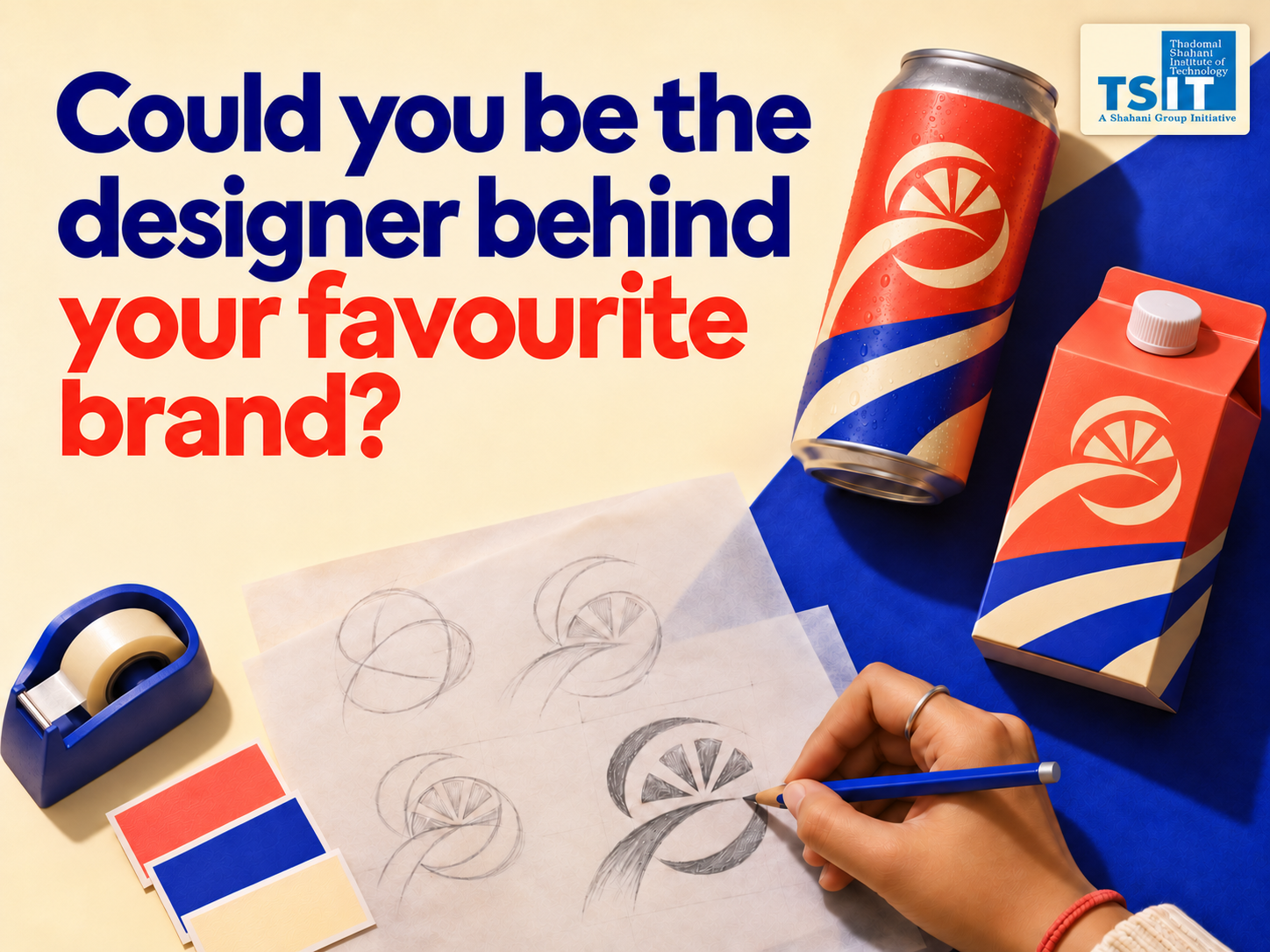
• Branding and brand identity
• Print design, such as brochures, flyers and packaging
• Social media and digital marketing creatives
• Portfolio building and client presentation
Which Software Will You Learn in a Graphic Design Course?
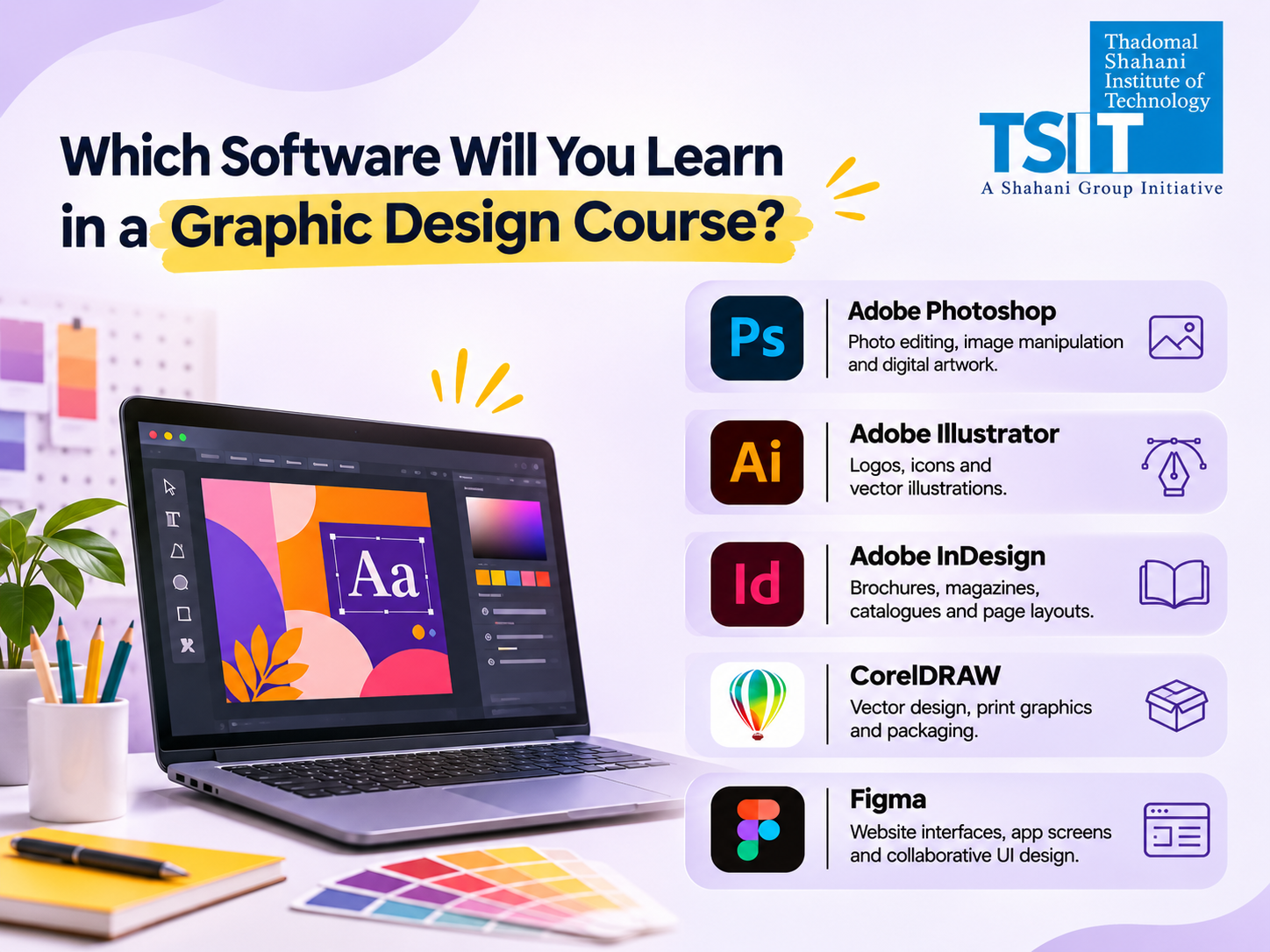
Which Graphic Design Software Should Beginners Learn First?
Adobe Photoshop and Adobe Illustrator are common starting points.
Photoshop is useful for working with photographs and digital compositions, while Illustrator is suited to vector graphics such as logos and icons.
Start with the software that matches the type of design you want to create. As your skills develop, you can explore additional tools.
What Careers Can You Build After a Graphic Design Course?
Graphic design opens many roles. Some common ones are:
- Graphic designer: Creates visuals for brands and campaigns.
- Brand identity designer: Designs logos and brand guidelines.
- Social media designer: Creates posts, stories and banners.
- Packaging designer: Designs product packs and labels.
- Print and publication designer: Works on magazines, brochures and catalogues.
- UI designer: Designs screens for websites and apps, usually with extra UI/UX training.
- Freelance designer: Works directly with clients.
A common growth path is Graphic Designer, Senior Designer, Art Director and then Creative Director. Your skills, portfolio and experience matter more than the name of the course.
What Should a Beginner’s Graphic Design Portfolio Include?
You do not need paid clients to begin. Create a few focused projects that show both your design skills and the reasons behind your choices.
Brand identity: Design a logo, colour palette and business card for an imaginary café.
Social media campaign: Create three connected Instagram posts for a fictional product.
Print design: Make an event poster or brochure using clear typography and layout.
For each project, add a short explanation of the brief, your process and what you improved.
How Is AI Changing Graphic Design?
AI tools can now suggest ideas, remove backgrounds, create image variations and speed up routine work. This helps designers finish tasks faster.
AI can support parts of the design process, but interpreting a brief, understanding an audience, checking quality and making responsible creative decisions still require thoughtful judgement. Designers should learn the fundamentals so they can assess and improve AI-generated work.
The smart approach is to learn design basics first and then use AI as a helper. Learn how to give clear instructions to AI tools and always check the results carefully. You can start with the Fundamentals Course in Generative AI, and read why checking results matters in The Importance of Critical Thinking for Students in Animation and AI.
How Can Beginners Use AI in Graphic Design?
Imagine designing a social media poster for a new café. AI might help you explore backgrounds, colour combinations and visual variations. You still need to decide which idea fits the café’s audience and brand. Check any generated text, image quality, originality and overall message before using it. This is why typography, colour theory, composition and branding remain essential.
How Do You Choose the Right Graphic Design Course?
Before joining a graphic design course, consider what you want to learn and how the programme supports your goals.
Here are six things to check.
1. Check the Course Syllabus
Look for a balance of design fundamentals, software training and practical projects.
A course should teach more than how to use software tools.
2. Look for Practical Training
Graphic design improves through practice.
Ask whether the course includes assignments, creative exercises and portfolio projects.
3. Understand the Software Covered
Check which tools are included and whether they match your interests.
For example, someone interested in branding may focus on Illustrator, while a student interested in image editing may begin with Photoshop.
4. Ask About Portfolio Development
Find out whether students receive guidance on selecting, improving and presenting their projects.
5. Compare Duration, Fees and Eligibility
Choose a course that fits your schedule, budget and educational background.
Check the complete fee structure and available payment options.
6. Explore the Learning Environment
Where possible, visit the institute, see the labs, understand the teaching approach and ask about practical training.
Graphic Design Courses at TSIT, Mumbai
At Thadomal Shahani Institute of Technology (TSIT), students can explore practical graphic design courses. TSIT lists centres in Mulund, Bandra, Malad, Prabhadevi and Ulhasnagar. Confirm the programme and batch availability for your preferred centre.
- Expert Course in Graphic Design
Expert Course in Graphic Design: The supplied course information lists a 6-month, 126-hour programme covering Photoshop, Illustrator, InDesign and CorelDRAW, with branding, print, social media and portfolio projects. Confirm the latest duration and syllabus with TSIT.
- Advanced Course in Graphic Design and Video EditingAdvanced Course in Graphic Design and Video Editing: The supplied course information lists an 8-month, 152-hour programme including Premiere Pro, After Effects and Audition alongside design skills. Confirm the latest duration and syllabus with TSIT.
If you are also interested in related skills, explore the Expert Course in UI / UX Design and the Expert Course in Video Editing.
Ask the institute about current fees, instalment options, eligibility, course schedules and availability at your preferred centre before applying.
How Can Beginners Start Learning Graphic Design?
You don’t need to create professional-level designs on your first day.
Start with small projects and gradually improve your skills.
Step 1: Observe Designs Around You
Look at logos, advertisements, posters and social media content.
Notice how designers use colours, fonts and images to communicate.
Step 2: Learn the Basic Principles
Understand typography, colour theory, composition and layout before moving to advanced techniques.
Step 3: Choose a Learning Path
Compare beginner courses, professional training and other learning options based on your goals and eligibility.
Step 4: Practise With Design Software
Begin with one tool and use it to create simple projects.
For example, design a poster using Photoshop or a logo using Illustrator.
Step 5: Create Small Projects Regularly
Try designing a social media post, event poster or brand logo.
Each project will help you practise a different skill.
Step 6: Build Your Portfolio
Select your strongest work and explain the thinking behind each design.
Step 7: Learn From Feedback
Share your work with trainers, classmates or other designers.
Understand what can be improved and apply those lessons to your next project.
What Mistakes Should Beginner Graphic Designers Avoid?
- Choosing a course only because it is cheap or short
- Learning software without learning design basics
- Copying other designs instead of creating your own style
- Ignoring typography, which is a big part of good design
- Waiting to finish the course before building a portfolio
- Depending on AI results without checking quality
Conclusion
Graphic design is a creative field that combines visual thinking, communication and technical skills.
Whether you are exploring design after Class 10, after Class 12 or as a new career direction, the right learning path depends on your goals and the skills you want to develop.
Start by understanding design fundamentals, learning relevant software and practising through small projects.
As you gain experience, focus on building a portfolio that shows both your creativity and your ability to solve design problems.
At TSIT, students can explore practical graphic design programmes designed to help them develop creative and technical skills.
Explore TSIT’s Graphic Design Courses and take the next step in your creative journe